Robert Ssekitoleko
ID: UNCST-2019-R001716
|
Strengthening Interdisciplinary Research in Technology Translational Pathways for Improved Maternal and Child Health in Uganda
REFNo: HS2056ES
The general objective of the study is to strengthen interdisciplinary research in Technology translational pathways for improved maternal and child health in Uganda,To build a network of researchers including social scientists, data scientists, health services researchers, business researchers and implementational scientists in order to improve innovations and use of appropriate medical technologies for maternal and child health for use in Uganda.,To determine the number of med-Tech innovations that have managed to translate into marketable products in Uganda.,To determine the organizations and requirements involved in Medical Technology translation in Uganda. ,To Map current research/researchers, approaches, and bottlenecks in medical devices translation in Uganda and the UK. ,
|
Uganda |
2022-02-08 |
2025-02-08 |
Medical and Health Sciences |
Non-Clinical Trial |
Non-degree Award |

|
Nora Slania Esther
ID: UNCST-2021-R012549
|
The evolutionary roots of curiosity: Understanding the interplay of chimpanzee (pan troglodytes) exploration tendencies, problem-solving skills, and neophobia
REFNo: NS319ES
We plan to identify conditions and factors that promote or suppress curiosity, as defined by
an interplay of exploration tendencies and neophobia, in chimpanzees in their natural
environment
|
Germany |
2022-02-04 |
2025-02-04 |
Natural Sciences |
Non-Clinical Trial |
Degree Award |

|
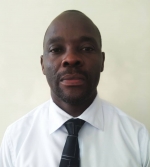
Mulumba Mathias Bwanika
ID:
|
Scaling the School readiness Initiative by Strengthening School and Community Capacities for the Adoption of Play-Based Learning in Uganda
REFNo: SS1161ES
To strengthen coordination structures in the Ministry of Education and Sports at national, district and regional levels for effective support of PBL ECDE centers in Uganda,To strengthen the capacity of teacher educators, teachers, parents, education leaders, and the community members in the support of Play-based learning (PBL) approaches for effective school readiness and transition of learners from pre-school to primary schooling.,To build capacity of teachers, teacher educators’ and parents in the development of play-based learning materials for use in ECDE classes in Uganda ,To examine the current play-based learning frameworks in ECDE to generate information to support policy strengthening to integrate play-based learning and scaling up of SRI in Uganda ,To strengthen the capacities of schools and communities for the adoption of play-based learning and curricula to contribute to enhanced school readiness and transition in ECDE and early grades of primary education in Uganda,
|
Uganda |
2022-02-04 |
2025-02-04 |
Social Science and Humanities |
Non-Clinical Trial |
Non-degree Award |
|
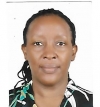
Elizabeth namukwaya namukwaya
ID: UNCST-2021-R013177
|
Exploring the needs and lived experiences of people with chronic disease among the refugee and host communities of Obongi district and the experiences of Village Health Teams workers in providing palliative care in Obongi and Adjumani districts
REFNo: HS1773ES
Primary Objective
1. To determine the prevalence of chronic illness and to understand the palliative care needs of refugee and host populations, their multidimensional experiences of living with chronic life limiting illnesses and VHTs experiences of caring for patients with chronic illnesses and offering mentorship support to other VHTs.
1.4.2 Specific Objectives:
1. To determine the prevalence of patients with chronic life limiting illnesses among people living within the villages served by selected VHTs in the refugee and host communities of Obongi and Adjumani district in Uganda
2. To determine and explore palliative care needs and multidimensional experiences of patients with chronic life limiting illnesses in Obongi district in Uganda
3. To Understand the experiences of VHTs in caring for those with palliative care needs and in offering mentorship to other VHTs to provide PC in Obongi and Adjumani districts.
|
Uganda |
2022-02-04 |
2025-02-04 |
Medical and Health Sciences |
Non-Clinical Trial |
Non-degree Award |
|
Patrick Ogwang Sam
ID: UNCST-2021-R013566
|
OPTIMUM EFFORT AND SUSTAINABLE YIELD OF THE FISHERIES OF LAKE KWANIA USING CATCH AND EFFORT DATA
REFNo: NS316ES
2. Conduct a catch Assessment Survey to quantify the current level of fish catches (catch) from the lake,1. Conduct a frame survey to establish the number and characteristics of fishing effort (Boats and Gear) on Lake Kwania,Fit Schaefer & Fox models to catch and effort data to determine the biological Maximum Sustainable Yield (MSY) and the corresponding optimum fishing effort (fMSY) and stable population size (BMSY) for the fishery. ,Conduct a catch Assessment Survey to assess the current level of fish exploitation (catch) on the lake,Conduct a frame survey to assess the characteristics of fishing inputs (effort) on Lake Kwania,This research is designed to assess the level of fisheries exploitation and determine the optimum fishing effort and sustainable yield for the fisheries of Lake Kwania. ,
|
Uganda |
2022-02-04 |
2025-02-04 |
Natural Sciences |
Non-Clinical Trial |
Degree Award |

|
| View |
|
Sort By: |
|
|
|
| |
|