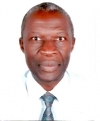
Francis Ssali
ID: UNCST-2021-R012134
|
Protocol A5394: “Safety, Tolerability, and Impact of Oral TLR8 Agonist Selgantolimod on HBsAg in Participants with both Chronic Hepatitis B and HIV” Version 1.0, May 27, 2022
REFNo: HS2647ES
1.2 Primary Objectives
1.2.1 To assess the safety and tolerability of treatment with SLGN administered once weekly by mouth for 24 weeks.
1.2.2 To determine the proportion of participants with ?1 log10 IU/mL decline in quantitative HBsAg (qHBsAg) after SLGN treatment at Week 24.
1.3 Secondary Objectives
1.3.1 To determine the proportion of participants with ?1 log10 IU/mL decline in qHBsAg at any time during the study after SLGN treatment initiation.
1.3.2 To determine the proportion of participants with ?0.5 log10 IU/mL decline in qHBsAg after SLGN treatment at Week 24.
1.3.3 To determine the proportion of participants with ?0.5 log10 IU/mL decline in qHBsAg at any time during the study after SLGN treatment initiation.
1.3.4 To evaluate the proportion of participants who achieve HBsAg loss after SLGN initiation and who sustain HBsAg loss during follow-up.
1.3.5 To evaluate changes in qHBsAg levels at Weeks 4, 12, 24, 36, and 48 after SLGN initiation and, separately, among the placebo recipients.
1.3.6 To determine the proportion of HBeAg positive participants at baseline who lose HBeAg at any time during the study, by study arm.
1.3.7 To determine the proportion of anti-HBe negative participants at baseline who develop anti-HBe at any time during the study, by study arm.
1.3.8 To determine the proportion of hepatitis B surface antibody (anti-HBs) negative participants at baseline who develop anti-HBs at any time during the study, by study arm.
1.3.9 To evaluate levels of circulating cytokines, including IFN-gamma, IL-12p40, IL-1RA, and CD163 at entry, 24 hours post-first study drug dose, Weeks 4, 12, 24, 36, and 48, by study arm.
1.3.10 To determine whether administration of SLGN will perturb HIV latency as measured by an increase in HIV transcription.
1.3.11 To determine whether administration of SLGN will decrease the size of the latent reservoir, as measured by the change in amount of cell-associated unspliced HIV RNA, HIV DNA, replication-competent and/or intact virus at Weeks 2, 4, 24, and 48.
1.4 Exploratory Objectives
1.4.1 To define the pharmacokinetic (PK) profile and PK-pharmacodynamic (PD) associations of SLGN in people with both HIV and CHB taking suppressive antiviral therapy for both viruses.
1.4.2 To explore if SLGN and antiretroviral (ARV) PK are altered when administered together.
1.4.3 To evaluate participants’ adherence by using several tools, including self-report, directly observed therapy (DOT), and drug concentrations.
1.4.4 To compare quantitative changes in experimental measures of HBV antiviral efficacy (including HBV RNA, hepatitis B core related antigen [HBcrAg], qHBeAg, and low positive HBsAg measured with a high sensitivity qHBsAg assay [LLOQ of 0.05 IU/mL]) and measure changes in large, medium, and small HBsAg isoforms from baseline during and after treatment.
1.4.5 To determine the immunological effects of SLGN on circulating immune signaling by performing single cell RNA sequencing using peripheral blood mononuclear cells (PBMCs) and evaluating HIV-specific T-cell responses.
1.4.6 To determine the effects on circulating immune cells, including cellular phenotypes and T and B-cell responses.
1.4.7 To determine whether administration of SLGN will affect levels of circulating cytokines, including TNF-alpha, IL-12, IL18, IP-10, ISG15, IL-21, Fas Ligand, and TRAIL.
|
Uganda |
2023-04-12 14:38:49 |
2026-04-12 |
Medical and Health Sciences |
Clinical Trial |
Non-degree Award |
|
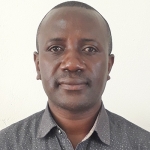
Alex Mwesigwa
ID:
|
P. falciparum genetic diversity, multiplicity of infection, gametocytaemia and recrudescence in areas of varied malaria transmission intensity in Uganda.
REFNo: HS2744ES
1. To compare the genetic diversity and multiplicity of P. falciparum infections in areas of varied malaria transmission intensity in Uganda.
2. To evaluate the relationship between malaria severity and P. falciparum genetic diversity, multiplicity of infection among patients living in areas of varied malaria transmission intensity in Uganda.
3. To investigate the temporal and seasonality changes in P. falciparum genetic diversity and multiplicity of infection among patients with malaria infection living in areas of varied malaria transmission intensity in Uganda.
4. To evaluate the performance of microsatellites in differentiating P. falciparum recrudescence from new infections.
|
Uganda |
2023-04-12 14:27:32 |
2026-04-12 |
Medical and Health Sciences |
Non-Clinical Trial |
Degree Award |
|
Jane Frances Zalwango
ID:
|
Etiopathogenesis of Blackwater Fever in Budaka District, Uganda: a pilot study
REFNo: HS2752ES
a)To explore the aetiology of BWF in Budaka District
b)To identify therapeutic interventions for the treatment of BWF
|
Uganda |
2023-04-12 14:23:40 |
2026-04-12 |
Medical and Health Sciences |
Non-Clinical Trial |
Non-degree Award |

|
Elizeus Rutebemberwa
ID: UNCST-2022-R009070
|
Evaluation of a Community Health Entrepreneur model in rural Uganda
REFNo: HS2196ES
4.3 General objective
To explore the role, reach, and scalability of CHE programme as a social franchise approach to address the issue of access to healthcare and potential embedment of the programme in the larger health system.
4.4 Specific objectives
1. To investigate health care seeking behaviour of residents in rural communities in Uganda, in order to assess community access, choice and use of health (care) services, service availability and quality, and experience of health care of households in villages in Uganda
2. To investigate the strengths and weaknesses of a CHE programme in communities which already have adopted this programme and the potential added value of a strengthened community health system by a CHE programme in communities without this programme
3. To investigate multi-stakeholder perceptions on the functioning, potential scale-up, and the possibility of integration of a social franchise approach in the larger health system in Uganda
|
Uganda |
2023-04-12 14:20:54 |
2026-04-12 |
Medical and Health Sciences |
Non-Clinical Trial |
Non-degree Award |

|
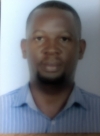
Isaac Ssewanyana
ID: UNCST-2020-R014336
|
Protocol for the establishment of clinical specimen panel for WHO Prequalification performance evaluation of HIV serology assays
REFNo: HS2786ES
To establish an HIV specimen repository at ITM.,To register the specimens into a Biobank at ITM; ,To characterize the specimens for HIV and syphilis serostatus using standardized reference assays and algorithms at ITM;,To collect biological specimens from patients with known HIV serostatus or blood donors from different regions of the world to establish a WHO HIV specimen evaluation panel that will be used for the laboratory performance evaluation of HIV serology assays undergoing WHO prequalification assessment; ,The overall objective is to assemble a new WHO HIV specimen evaluation panel in collaboration with PELs and collaborating centers, which will be made accessible on demand to all the PELs conducting HIV or dual HIV-syphilis serology test evaluations for WHO prequalification.,
|
Uganda |
2023-04-12 12:56:08 |
2026-04-12 |
Medical and Health Sciences |
Non-Clinical Trial |
Non-degree Award |
|
| View |
|
Sort By: |
|
|
|
| |
|