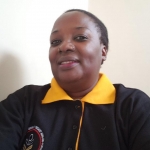
SARAH NAWOOVA
ID:
|
COACHING AND LECTURERS' SUPERVISION SKILLS IN NATIONAL TEACHERS' COLLEGES IN UGANDA
REFNo: SS891ES
1. TO EXAMINE THE RELATIONSHIP BETWEEN COACHING AND LECTURERS' REFLECTIVE QUESTIONING SKILLS.
1.TO EXAMINE THE RELATIONSHIP BETWEEN COACHING AND LECTURERS' OBSERVATION SKILLS.
3.TO EXAMINE THE RELATIONSHIP BETWEEN COACHING AND LECTURERS' FEED BACKING SKILLS.
|
Uganda |
2021-07-22 |
2024-07-22 |
Social Science and Humanities |
Non-Clinical Trial |
Degree Award |
|
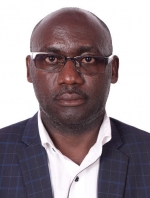
Benon Asiimwe Byamugisha
ID:
|
COVID-19 and Antimicrobial Resistance in East Africa: impact and response (CARE)
REFNo: HS1519ES
To establish how community members have received and responded to health messages on COVID-19,To examine how the COVID-19 crisis is affecting patient treatment seeking, drug use, and understanding of illness, and how this is affecting the wider landscape of AMR,To the establish antibiotic provision landscape from the perspective of drug sellers, pharmacists, traditional medicine providers, and formal healthcare workers,To investigate how COVID-19 may be modifying patients’ treatment seeking behaviour, their usage of medicines/ABs and affecting access to and provision of ABs in the therapy landscape in Uganda,
|
Uganda |
2021-07-22 |
2024-07-22 |
Medical and Health Sciences |
Non-Clinical Trial |
Non-degree Award |
|
Mauro Giacomazzi
ID:
|
Effectiveness of the Whole School System Approach in Fostering Critical Thinking among Learners in Ugandan Secondary Schools
REFNo: SS931ES
Main objective
To investigate how the whole school system approach to critical thinking contributes to the development of leaners’ cognitive abilities in Ugandan secondary schools.
Specific objectives
(i) To establish the meaning of critical thinking in the Ugandan context.
(ii) To explore how teachers can improve their teaching and learning through the critical thinking activation approach.
(iii) To explore how critical thinking can be appropriately assessed in the Ugandan secondary school context.
(iv) To establish the extent to which the whole school system approach contributes to the development of critical thinking abilities of Ugandan secondary school learners.
(v) To establish individual, school and home related factors that influence critical thinking abilities of Ugandan secondary school learners.
(vi) To explore the strategies that Ugandan secondary school teachers use in preparing and delivering critical thinking augmented lessons.
|
Italy |
2021-07-22 |
2024-07-22 |
Social Science and Humanities |
Non-Clinical Trial |
Non-degree Award |
|
Robert Opika Opoka
ID: UNCST-2021-R014036
|
The role of prolonged exposure to parasitemia in the high morbidity in children with Sickle cell anaemia in Uganda
REFNo: HS1496ES
Primary Aims
1. To determine the rate of parasite clearance during artesunate therapy in children with sickle cell anaemia compared to children without SCA.
We hypothesize that children with SCA will experience parasite clearance half-life times exceeding the WHO-defined standard of 5 hours when treated with artemisinins for P. falciparum malaria, whereas children without SCA will not experience this delayed parasite clearance.
2. To determine the association between parasite clearance rate and risk of vaso-occlusive crisis, severe anaemia, and any hospitalisation in children with SCA.
We hypothesize that prolonged parasite clearance will correlate with increased risk of SCA-related sequelae.
3. To determine the association between kidney and splenic function and parasite clearance half-life during artesunate treatment for malaria.
We hypothesize that impaired renal function (estimated creatinine clearance) and splenic function (presence of Howell-Jolly bodies) will correlate with increased parasite clearance half-life.
Secondary Aims
1. To determine the incidence of treatment failure (new clinical malaria within a 28-day follow-up period after microscopy-confirmed parasite clearance) after artemisinin combination therapy for malaria
2. To detect and measure the prevalence of parasite genetic markers of artemisinin resistance in Jinja
|
Uganda |
2021-07-21 |
2024-07-21 |
Medical and Health Sciences |
Non-Clinical Trial |
Non-degree Award |

|
James Nyonyintono Mwangwa
ID: UNCST-2023-R005636
|
Feasibility of Use of the PATH bCPAP Kit including Oxygen Blenders in a Neonatal Population in Uganda
REFNo: HS650ES
Primary Objectives:
1. To assess the operational feasibility of using the PATH bCPAP kit including, when appropriate, in-line oxygen blending on neonatal patients.
2. To assess the usability and acceptability of the PATH bCPAP kit with oxygen blenders by healthcare workers.
Secondary Objective:
1. To report clinical characteristics, demographics and outcomes of patients treated with the PATH bCPAP kit and blenders in a newborn care unit in rural Uganda.
|
Uganda |
2021-07-19 |
2024-07-19 |
Medical and Health Sciences |
|
Non-degree Award |
|
Esther Buregyeya
ID: UNCST-2020-R014116
|
Using a behavioural approach to design an antimicrobial stewardship intervention in healthcare facilities in Kampala, Mukono and Luwero Districts, Uganda
REFNo: HS1303ES
1. To explore the barriers to and facilitators for rational use of antibiotics and setting up AMS programs in HCFs in Uganda.
2. To develop, pilot an AMS behavioural intervention and assess its acceptability, feasibility and effect to foster appropriate antibiotic prescription in HCFs in Uganda.
3. To assess the cost of the intervention in fostering rational use of antibiotics in Uganda.
|
Uganda |
2021-07-16 |
2024-07-16 |
Medical and Health Sciences |
|
Non-degree Award |

|
Shevin Jacob Thomas
ID:
|
AN OBSERVATIONAL STUDY TO ASSESS THE UTILITY OF BEDSIDE ULTRASOUND SCAN IN SEPSIS TREATMENT AMONG HOSPITALIZED ADULTS IN UGANDA
REFNo: HS1499ES
General objective: To describe the potential utility of bedside ultrasound scanning in evaluating adult patients with suspected sepsis admitted to hospitals in Uganda
Specific objectives:
1. Estimate the proportion of patients admitted to the medical emergency unit with suspected sepsis who have ultrasound findings consistent with intravascular fluid depletion.
2. Estimate the proportion of patients admitted to the medical emergency unit with suspected sepsis who have ultrasound findings suggestive of intolerance to high volume intravenous fluid.
3. Estimate the proportion of patients admitted to the medical emergency unit with suspected sepsis who have ultrasound findings that identify a potential source of infection.
4. Determine the feasibility of delivering POCUS to evaluate non-pregnant adult patients with sepsis by clinicians who are not specialized in radiology.
|
USA |
2021-07-16 |
2024-07-16 |
Medical and Health Sciences |
Non-Clinical Trial |
Non-degree Award |

|
Conrad Muzoora Kihembe
ID: UNCST-2019-R001432
|
Determination of Adequate TUberculosis Regimen in Adults and adolescents hospitalised with HIV-associated severe immune suppression (Acronym: DATURA).
REFNo: HS1487ES
Primary objective: To estimate the impact of an intensified initial phase of tuberculosis (TB) treatment on mortality at 48 weeks among HIV-infected adults and adolescents hospitalised for TB with CD4 ≤ 100 cells/μL in comparison with the standard TB regimen.
Secondary objectives: To estimate the impact of an intensified initial phase of TB treatment, in comparison with the standard TB regimen, on:
¥ Mortality at weeks 8 and 24
¥ Adverse events, including:
- All grade 3-4 events
- Selected grade 2 events of interest
- Drug-related adverse events
- AIDS defining illnesses
- Paradoxical TB-associated immune reconstitution inflammatory syndrome (IRIS)
¥ TB treatment success
¥ TB recurrence
¥ Antiretroviral treatment (ART) response in terms of virological success and immunological response
¥ Adherence to TB treatment and ART
¥ Peak plasma concentrations of rifampicin and isoniazid (and its N-acetyl-metabolite) at day 3, day 7 and week.
¥ Plasma concentrations of efavirenz and dolutegravir at week 4 (i.e. 2 weeks after the onset of ART)
|
Uganda |
2021-07-16 |
2024-07-16 |
Medical and Health Sciences |
Clinical Trial |
Non-degree Award |
|
Davis Ntulume Roland
ID:
|
A Cross Sectional Study on Exploring the Lifestyle of Makerere University Staff With an Aim of developing a Bespoke Healthy Living Program for people in Academia
REFNo: HS1500ES
Our main goal is to identify and understand the key factors that attribute a typical working day of Makerere University and inhibitors of following a heathy living programme and use this feedback
10
to design a contextually appropriate and bespoke programme for adoption in the field of academia and other sectors at large. This will be achieved in the following sub aims:
1. To establish the dietary and physical activity patterns of overweight and obese staff at Makerere University College of Health Sciences staff.
2. To support overweight and obese individuals to adopt an energy restricted diet and weekly physical exercise while establishing the behavioural and social determinants of compliance to the programme.
3. To establish the effect of change on food and activity body weight and health status and recommend a bespoke healthy living programme that puts into consideration the routine, perceptions and inhibitors to living a healthy lifestyle that works for Academic staff nationwide.
|
Uganda |
2021-07-16 |
2024-07-16 |
Medical and Health Sciences |
Non-Clinical Trial |
Non-degree Award |
|
Jude Ssempebwa
ID:
|
COVID-19 and the Youth Question in Africa: Piloting a Vertically Integrated Social Accountability and Advocacy Framework in the IGAD Region (COYOQA)
REFNo: SS921ES
1. To carry out a comprehensive gender analysis of the current social mobilization of youth in informing, co-designing and supporting COVID-19 pandemic emergency preparedness and response, capacity, key gaps and support needs among IGAD Member States (Ethiopia, Kenya and Uganda).
2. To build the capacity of male and female Youth Volunteers for Behavior Change (YOV4BC) in emergency preparedness, response (disaster risk reduction and management) and building resilience to impacts of COVID-19 so that they are well informed, resourced and educated about COVID-19 and its prevention measures.
3. To partner with the youth to take action within their communities through developing and institutionalizing a standardized and harmonized COVID-19 Vertically Integrated Social Accountability and Advocacy Framework for monitoring the IGAD Regional Response Strategy(IRRS) for COVID-19 Pandemic in Kenya, Uganda and Ethiopia.
4. To investigate and track gender differentiated sectoral socio-economic impacts of COVID-19 on youth and their communities and document community perceptions and response strategies.
5. To facilitate meaningful policy engagement between male and female youth and policy makers through enhanced national, sub-national and regional knowledge sharing platforms.
|
Uganda |
2021-07-16 |
2024-07-16 |
Social Science and Humanities |
Non-Clinical Trial |
Non-degree Award |
|
| View |
|
Sort By: |
|
|
|
| |
|