Daniel Lubanga
ID: UNCST-2025-R018596
|
Strengthening Psychosocial and Livelihood Resilience for Displaced Women in Kampala
REFNo: SS5474ES
To assess the feasibility and acceptability of an integrated community-based MHPSS and livelihoods intervention for refugee and host-community women in urban Kampala, including facilitator fidelity, participant retention, and participant and facilitator satisfaction.
To evaluate preliminary changes in psychological distress and positive mental health among participants at post-intervention and 3-month follow-up, compared to baseline, following engagement in the 12-week integrated PSS-PM+ curriculum.
To assess whether the integrated group intervention strengthens social cohesion, peer support networks, and intra- and inter-group trust among participants, and to compare outcomes between nationality-homogeneous (Cohort A) and mixed-nationality (Cohort B) groups.
To measure preliminary changes in livelihood readiness, economic self-efficacy, and participation in income-generating activities following the integrated MHPSS and livelihoods intervention.
|
Uganda |
2026-07-31 16:53:39 |
2029-07-31 |
Social Science and Humanities |
Non-Clinical Trial |
Non-degree Award |

|
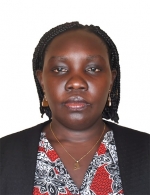
Betty OKOT
ID: UNCST-2021-R013938
|
Reimagining the “Good Classroom” in the Ugandan Refugee Contexts: Assessing Strategies for Enhancing Learners' Literacy Skills and Classroom Practice
REFNo: SS5436ES
1.2. Study objectives
The main objective of the study is to generate evidence on literacy education practices in crisis-affected contexts, with a focus on classroom practices, teacher-learner interactions, and the scalability and inclusivity of strategies that enhance literacy and RSEL outcomes for learners in refugee and displacement settings.
Specific objectives
1. To assess classroom practices and teacher-learner interactions in early years for enhancing literacy skills of learners in refugee and displacement contexts.
2. To identify scalable strategies to improve classroom practices and learning outcomes in literacy and RSEL for learners in crisis-affected areas.
3.To identify the challenges and opportunities for implementing scalable, inclusive teaching-learning strategies for literacy and RSEL in crisis contexts.
|
Uganda |
2026-07-31 16:52:19 |
2029-07-31 |
Social Science and Humanities |
Non-Clinical Trial |
Non-degree Award |
|
Rosalind Parkes-Ratanshi Parkes
ID: UNCST-2019-R000717
|
PHARMA-GIRL: EMPOWERING ADOLESCENT GIRLS AND YOUNG WOMEN WITH
CHOICE AND PREVENTION IN PHARMACY-BASED HIV INTERVENTIONS; WITH A
FOCUS ON PRE-EXPOSURE PROPHYLAXIS
REFNo: HS7762ES
1.Determine the necessary pharmacies and AGYW considerations for scaling the CRPDDP to include pharmacy-based PrEP and adherence support
2.Evaluate pharmacy providers’ willingness, acceptability, feasibility, and readiness to offer different PrEP technologies to AGYW
3.Investigate the degree of alignment between pharmacist and AGYW preferences for pharmacy-based PrEP implementation models
|
UK |
2026-07-31 16:51:03 |
2029-07-31 |
Medical and Health Sciences |
Non-Clinical Trial |
Non-degree Award |
.jpg)
|
Edwin Nuwagira
ID: UNCST-2021-R013488
|
Steroids and enhanced spectrum antibiotics for the treatment of patients in Africa with refractory sepsis
REFNo: HS7921ES
The primary objective is:
1) To conduct a randomized 2x2 factorial clinical trial comparing immediate hydrocortisone and enhanced spectrum antimicrobial therapy to standard care for patients with HIV and sepsis in sSA to:
1a) Determine if hydrocortisone decreases 28-day mortality
2a) Determine if expanded spectrum of immediate antimicrobial therapy of rifampin, isoniazid, levofloxacin and linezolid decreases 28-day mortality.
The secondary objectives include:
1) To determine if hydrocortisone plus standard of care decreases the duration of septic shock
2) To determine if the expanded spectrum of antimicrobial therapy plus standard of care improves antibiotic susceptibility
Other secondary objectives include determining if hydrocortisone, the expanded antimicrobial therapy or the combination plus standard of care improve:
• In-hospital mortality
• 6-month mortality
• Time to death
• Duration of hospitalization
• Volume of intravenous fluids received
• Adverse drug events during the 28-day study period
• Time to ambulation
• Time to temperature normalization
• Lactate/delta lactate measurement at randomization and 72 hours from randomization
• Capillary fill time/delta capillary fill time measurement at randomization and 72 hours from randomization
• UVA score at randomization and 72 hours from randomization
|
Uganda |
2026-07-31 16:49:15 |
2029-07-31 |
Medical and Health Sciences |
Clinical Trial |
Non-degree Award |

|
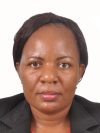
RUTH KAALA
ID: UNCST-2026-R025169
|
Behaviour attributes, financial literacy and Microinsurance uptake among micro and small Enterprises in Rubaga Division- Kampala, Uganda
REFNo: SS5706ES
a) To determine the effect of risk perception on micro-insurance uptake among micro and small enterprises in Rubaga Division Kampala, Uganda.
b) To establish the effect of personal experience on micro-insurance uptake among micro and small enterprises in Rubaga Division Kampala, Uganda.
c) To examine the effect of trust on micro-insurance uptake among micro and small enterprises in Rubaga Division Kampala, Uganda.
d) To Investigate the moderating role of financial literacy on the relationship between:
i. Risk perception and micro-insurance uptake among micro and small enterprises in Rubaga Division Kampala, Uganda.
ii. Personal experience and micro-insurance uptake among micro and small enterprises in Rubaga Division Kampala, Uganda.
iii. Trust and micro-insurance uptake among micro and small enterprises in Rubaga Division Kampala, Uganda.
|
Uganda |
2026-07-31 16:46:13 |
2029-07-31 |
Social Science and Humanities |
Non-Clinical Trial |
Degree Award |
|
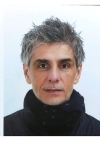
andrea cassatella
ID: UNCST-2026-R025889
|
THE LIVED EXPERIENCES, EVERYDAY VIOLENCE AND CONTESTATIONS AROUND ENVIRONMENTAL CHANGE IN KIRYANDONGO’S AGRARIAN COMMUNITIES
REFNo: SS5552ES
The main objective of this study is to investigate the relationships, experiences and forms of normalised violence and contestations between local communities and public authorities in Kiryandongo district, in the context of environmental change.
More specifically, the study seeks to:
I. Examine the forms of everyday violence that take place in the relations between local communities and public authorities.
II. Explore how different local communities in Kiryandongo district experience and respond to everyday violence in the context of environmental change.
III. Investigate how and the extent to which discourses and interventions related to climate change influence the relations between communities and public authorities.
|
Italy |
2026-07-31 16:41:19 |
2029-07-31 |
Social Science and Humanities |
Non-Clinical Trial |
Non-degree Award |
|
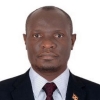
Dan Senjovu Kaggwa
ID:
|
Efficacy of Group Cognitive Behavioural Therapy in Outpatient Management of Hypertension Among Adults: A Randomized Controlled Trial
REFNo: HS8124ES
i. To adapt group CBT for patients with hypertension in Uganda.
ii. To determine the effect of adapted group CBT on psychological and behavioural outcomes among patients with high blood pressure.
iii. To establish the efficacy of the adapted group CBT on blood pressure control among outpatients with uncontrolled BP in Uganda.
iv. To establish the feasibility of using group CBT in patients with hypertension in Uganda
|
Uganda |
2026-07-31 16:37:57 |
2029-07-31 |
Medical and Health Sciences |
Non-Clinical Trial |
Degree Award |
|
AINEBYOONA CHRISTINE
ID: UNCST-2026-R023952
|
SOCIAL- ECONOMIC FACTORS AND MALE VICTIMISATION IN BUSHENY DISTRICT,UGANDA
REFNo: SS5470ES
General objective
The general objective of the study is to establish the moderating effect of legal environment on the relationship between social-economic factors on Male victimization in Bushenyi District.
Specific objectives
i. To investigate the effect of social factors on male victimization in Bushenyi District, Uganda
ii. To analyze the effect of economic factors on male victimization in Bushenyi District, Uganda
iii. To analyze the effect of socio-Economic factors on male victimization in Bushenyi District, Uganda.
iv. To find out the moderating role of legal environment on the relationship between social-economic factors and male victimization in Bushenyi District, Uganda
|
Uganda |
2026-07-31 16:35:00 |
2029-07-31 |
Social Science and Humanities |
Non-Clinical Trial |
Degree Award |

|
ITEO JOHNBOSCO
ID: UNCST-2026-R023383
|
Impact of Land Use and Land Cover Change on the elephant (Loxodonta Africana) Crop-raiding patterns in Kidepo Valley Conservation Area, Uganda.
REFNo: NS1344ES
Main Objective: To examine how land use and land cover change influence elephant crop raiding patterns in Kidepo Valley Conservation, Uganda.
Specific Objectives
1. To quantify changes in the spatial extent of LULC classes in the KVCA between 2000 and 2025
2. To assess the spatial distribution and temporal trends of elephant crop-raiding incidents in KVCA from 2015 to 2025.
3. To analyze the spatial relationship between land use change and the distribution of elephant crop-raiding incidents in KVCA.
|
Uganda |
2026-07-31 16:33:42 |
2029-07-31 |
Natural Sciences |
Non-Clinical Trial |
Degree Award |
|
Sula Tumusiime
ID: UNCST-2026-R025251
|
Secondary Analysis of ALAMIME Project Data to Generate Evidence on Leadership and Management Capacity Strengthening for Malaria Elimination in Africa
REFNo: HS8033ES
General Objective
To analyze existing ALAMIME program data to evaluate the effectiveness of the training, document leadership capacity outcomes and implementation experiences, and generate evidence on the programmes contribution to strengthening malaria control and elimination efforts across participating African countries.
Specific Objectives
1. To measure the pedagogical outcome of the ALAMIME training by analyzing pre- and post-training assessment data and comparing performance across learning modalities.
2. To describe the development, implementation, and outcomes of the ALAMIME Alumni Monthly Webinars conducted across six African countries and the wider consortium platform, with particular emphasis on their contribution to sustained leadership capacity strengthening.
3. To evaluate the effectiveness of the ALAMIME training program in strengthening leadership competencies among health professionals engaged in malaria control and elimination.
4. To synthesize findings from practicum reports submitted by trainees, exploring how participants applied leadership and management skills to address real-world malaria-related challenges within their institutions and districts.
5. To document lessons learned from cascade training initiatives, where ALAMIME trainees conducted dissemination sessions within their home institutions to transfer acquired knowledge and skills, drawing experiences from nine participating African countries.
|
Uganda |
2026-07-31 16:30:50 |
2029-07-31 |
Medical and Health Sciences |
Non-Clinical Trial |
Non-degree Award |

|
| View |
|
Sort By: |
|
|
|
| |
|