William Worodria Ofuti
ID: UNCST-2022-R010915
|
Rapid Research in Diagnostics Development for TB Network (R2D2 TB Network) Study
REFNo: HS1482ES
1. To evaluate early and late prototypes of novel TB diagnostics to provide feedback to developers on performance and usability, inform further development and identify potential strategies for use in endemic settings.
2. To conduct large-scale, multi-center assessments of the accuracy and usability of design-locked novel TB diagnostics, including in special populations, to facilitate World Health Organization (WHO) policy review.
3. To assess the potential costs and epidemiological impact of novel TB diagnostics alone or in combination with current tests and algorithms to inform their further assessment and/or the WHO policy review process.
|
Uganda |
2021-07-28 |
2024-07-28 |
Medical and Health Sciences |
Non-Clinical Trial |
Non-degree Award |

|
Rhona Baingana Kezabu
ID: UNCST-2021-R013638
|
THE 2021 DHS-8 PILOT
REFNo: HS1529ES
To compare hemoglobin concentrations between venous blood, a single drop of capillary blood, and a pooled capillary blood sample in children age 6-59 months and non-pregnant women age 15-49 in a laboratory setting and a field setting,To program and pilot collection of other types of data (for assessing/ensuring interview data quality),To improve various aspects of the CAPI data capture process,To test the computer-assisted personal interviewing (CAPI) data collection application for new sections of the questionnaire ,To understand the performance of selected new core questions and modules with respect to aspects that can be assessed through cognitive interviewing: comprehension, retrieval, judgement, and response,To test selected core questions, new modules, the Domestic Violence module, and a number of the CAPI innovations under field conditions for the eighth round of The Demographic and Health Surveys (DHS) Program. ,
|
Uganda |
2021-07-28 |
2024-07-28 |
Medical and Health Sciences |
Non-Clinical Trial |
Non-degree Award |

|
Gertrude Namale
ID:
|
Post-discharge Care for Stroke patients in Uganda: barriers and enablers of appropriate secondary preventive care, coping mechanisms and access to rehabilitation service
REFNo: HS1522ES
Overall aim
To improve the quality of life of stroke survivors in Uganda by examining the barriers and enablers of appropriate care and support following discharge from hospital.
Specific objectives
1. To examine the barriers and enablers of stroke survivors’ participation in self-reported home-based physical activity and adherence to clinic follow-up schedules post-discharge
2. To document the experiences and opinions of facility-based health care providers on post-discharge follow-up and care for stroke patients
3. To describe the coping mechanisms among stroke survivors and their caregivers after discharge (a) adjustment to lifestyle behaviour post-stroke b) needs and concerns; c) depression symptoms
4. To document barriers and facilitators related with access to rehabilitation services among stroke patients post-discharge
|
Uganda |
2021-07-28 |
2024-07-28 |
Medical and Health Sciences |
Non-Clinical Trial |
Non-degree Award |
|
Edgar Agaba
ID:
|
A framework for improving the effectiveness of integrated nutrition interventions in Uganda
REFNo: HS1549ES
1. Evaluate the program design, selected nutrition, and health outcomes among women and children under 5 years at baseline and at the end of the Community Connector interventions.
2. Explore the experiences of the implementers and the beneficiaries of the Community Connector interventions.
3. Evaluate the effectiveness of the Community Connector interventions on nutrition and health outcomes among women and children under 5 years.
4. Develop and validate a framework for improving effectiveness of integrated nutrition interventions for implementation in resource-poor settings.
|
Uganda |
2021-07-28 |
2024-07-28 |
Medical and Health Sciences |
Non-Clinical Trial |
Degree Award |
|
Lore Vandewalle
ID: UNCST-2021-R014028
|
Small Firm Diaries with carpenters in Uganda
REFNo: SS919ES
The main objective of this research is to understand the frictions in the market for outputs that hamper the growth of small-scale carpenters in Uganda. We will write a descriptive paper that outlines the frictions we observed. Given the large number of programs targeting MSMEs to foster employment growth in low-income countries, the recommendations that will emerge from our project will be useful to policy makers operating at local, national and supra-national levels.
The second objective is designing an intervention tailored to remove the most important friction we observed in the market for outputs. We will test this intervention using a randomized control trial and will estimate its causal effect on the growth of small-scale carpenters. Growth will be measured through changes in revenues, profits, productivity and employment. This should be informative to both academics and policy makers as well. The intervention is not yet defined, as we want to use the data to identify the most prominent friction in the market for outputs that limits the growth of carpenters. We will request an amendment to this IRB as soon as it has been designed.
The final objective is assembling unique data on small-scale carpenters in Uganda. As detailed in the methodology subsection below, we will create two unique panels that will allow us to map a complete, real-time characterization of the performance of small enterprises, decision-making and shock responses of entrepreneurs, inputs’ usage and business relationships, including partner-specific trade interactions. These datasets are instrumental to accomplish the first two objectives: it provides the information needed to understand the frictions in the markets for outputs (main objective) and to define the intervention (objective 2). We list the datasets as a separate objective, as these will become public and can thus be used by policy makers, other researchers and students as well.
|
Belgium |
2021-07-27 |
2024-07-27 |
Social Science and Humanities |
Non-Clinical Trial |
Non-degree Award |
|
Ronald Twongyirwe
ID:
|
Analysis of past and projected future land use change and its impact on sediment fluxes in the Rwizi catchment
REFNo: NS147ES
. Firstly, the project aims at strengthening the academic research capacity at the universities of Mbarara and Gulu (Uganda) by means of the training of two PhD-researchers and several postdoctoral researchers in the field of integrated watershed management. Secondly, the project will develop fundamental research on the, hitherto largely overlooked, coupling between demographic developments on the one hand, and the degradation of soil and water resources on the other hand. Thirdly, the results from this fundamental research will be translated into landscape transformation models that will allow land managers and policymakers to evaluate alternative devel-opment pathways for the catchment.
|
Uganda |
2021-07-26 |
2024-07-26 |
Natural Sciences |
|
Degree Award |

|
SHANI BUDIGOLI DEODATUS
ID:
|
Prevalence, clinical manifestations, relationship with viral load of cutaneous disorders among children and adolescents living with HIV attending Mbarara Regional Referral Hospital.
REFNo: HS1265ES
1. To determine the prevalence of cutaneous disorders among children and adolescents living with HIV attending pediatric infectious Diseases' clinic at MRRH.
2. To describe the clinical manifestations of cutaneous disorders among children and adolescents living with HIV attending paediatric infectious Diseases’ clinic at MRRH.
3. To determine the relationship of cutaneous disorders and viral load among children and adolescents living with HIV attending pediatric infectious Diseases’ clinic at MRRH.
4. To assess the relationship between cutaneous disorders and CD4 counts among children and adolescents living with HIV attending pediatric infectious Diseases’ clinic at MRRH.
|
Tanzania |
2021-07-26 |
2024-07-26 |
Medical and Health Sciences |
|
Degree Award |

|
Timothy Kiyemba
ID:
|
Protocol for conducting the beneficiary survey for the USAID Defeat TB project.
REFNo: HS1518ES
The purpose of this beneficiary survey is to assess the results of project implementation with regard to health workers, TB patients and the general community after 3 years of activity implementation in Kampala, Wakiso and Mukono districts.
|
Uganda |
2021-07-26 |
2024-07-26 |
Medical and Health Sciences |
Non-Clinical Trial |
Non-degree Award |

|
Brenda Boonabaana
ID:
|
Developing and displacing the 21st century city: mapping the spatial strategies and impacts of global retail investment
REFNo: SS916ES
1.To understand the geographic contexts of global retail capital investment;
2. To trace and understand its geographic transformations;
3. To understand and create grounded and sustainable responses.
|
Uganda |
2021-07-26 |
2024-07-26 |
Social Science and Humanities |
Non-Clinical Trial |
Non-degree Award |
|
Samuel Kabwigu
ID: UNCST-2020-R014735
|
ENHANCING UNDERSTANDING OF ADOLESCENT PREGNANCY IN UGANDA: TOWARDS FUTURE IMPLEMENTATION
REFNo: HS859ES
1. Examine how familial relationships influence adolescent pregnancy in Luuka district.
2. Explore factors in the community, (such as ICTS, policies and regulation, or health services) that influence adolescent pregnancies in Luuka District.
3. Assess ways of enhancing familial relationships as a meditative approach that will reduce rates of adolescent pregnancies in Luuka district.
|
Uganda |
2021-07-23 |
2024-07-23 |
Medical and Health Sciences |
Non-Clinical Trial |
Degree Award |
|
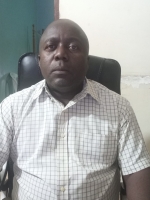
Rottenberg Esther Sophia
ID:
|
Making evidence on antimicrobial resistance: a historical and ethnographic study across the UK and Uganda
REFNo: SS622ES
To show how evidence on antimicrobial resistance is produced with the help of a model.
2) To understand how the context of Hoima shapes the production of knowledge on antimicrobial resistance.
3) To investigate the negotiations taking place within the context of a transnational, interdisciplinary research collaboration.
|
Germany |
2021-07-22 |
2024-07-22 |
Social Science and Humanities |
Non-Clinical Trial |
Degree Award |

|
Jonathan Kajjimu
ID: UNCST-2021-R013696
|
MATERNITY CARE FOR WOMEN REFUGEES FROM NAKIVALE REFUGEE RESETTLEMENT: A NEEDS ASSESSMENT
REFNo: SS874ES
1. To determine the socio-demographic characteristics of pregnant refugee women and recently delivered refugee mothers from Nakivale refugee settlement.
2. To describe the experiences of pre-pregnancy, pregnancy, childbirth, postnatal periods, and maternity services available to refugee pregnant women and newly delivered refugee mothers from Nakivale.
3. To identify gaps in maternity care delivered to refugee pregnant women and newly delivered refugee mothers from Nakivale refugee settlement.
4. To acquire opinions of maternity services providers, and refugee pregnant women, and newly delivered refugee mothers from Nakivale refugee settlement on how to improve the refugee pregnancy outcomes.
|
Uganda |
2021-07-22 |
2024-07-22 |
Social Science and Humanities |
Non-Clinical Trial |
Non-degree Award |

|
Katherine Fiorillo Fiorillo
ID:
|
Measuring Women's Empowerment in Agroforestry Activities in Northern Uganda
REFNo: SS799ES
Research Questions:
● What is the baseline level of women’s empowerment in agroforestry in the project target area?
● How can project activities better address issues of women’s empowerment in agroforestry in the target area?
The main objectives of this research study, listed above, are to understand the baseline level of women’s empowerment and how the project can better respond to these issues. The baseline will be used to both inform and to monitor the project progress towards women’s empowerment. A strong evidence base will allow Kijani to adapt programming to better meet the needs of the community. Qualitative protocols will ensure that the community’s needs and values are being expressed fully in the research process.
|
USA |
2021-07-22 |
2024-07-22 |
Social Science and Humanities |
Non-Clinical Trial |
Degree Award |

|
Alex Bakenga
ID: UNCST-2021-R014039
|
Outcomes of treatment with ADT and chemotherapy in patients with metastatic prostate cancer at the Uganda cancer institute
REFNo: HS1542ES
Objective 1: To describe the biochemical response (TPSA) of patients with metastatic prostate cancer treated with ADT and chemotherapy at the Uganda cancer institute.
Objective 2: To determine the 1, 3 and 5-year survival among patients with metastatic prostate cancer treated with ADT and chemotherapy at the Uganda cancer institute.
Objective 3: To determine predictors of 1, 3 and 5-year survival among patients with metastatic prostate cancer treated with ADT and chemotherapy at the Uganda cancer institute.
|
Uganda |
2021-07-22 |
2024-07-22 |
Medical and Health Sciences |
Non-Clinical Trial |
Non-degree Award |

|
SARAH NAWOOVA
ID:
|
COACHING AND LECTURERS' SUPERVISION SKILLS IN NATIONAL TEACHERS' COLLEGES IN UGANDA
REFNo: SS891ES
1. TO EXAMINE THE RELATIONSHIP BETWEEN COACHING AND LECTURERS' REFLECTIVE QUESTIONING SKILLS.
1.TO EXAMINE THE RELATIONSHIP BETWEEN COACHING AND LECTURERS' OBSERVATION SKILLS.
3.TO EXAMINE THE RELATIONSHIP BETWEEN COACHING AND LECTURERS' FEED BACKING SKILLS.
|
Uganda |
2021-07-22 |
2024-07-22 |
Social Science and Humanities |
Non-Clinical Trial |
Degree Award |
|
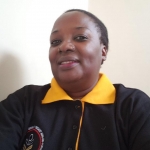
Benon Asiimwe Byamugisha
ID:
|
COVID-19 and Antimicrobial Resistance in East Africa: impact and response (CARE)
REFNo: HS1519ES
To establish how community members have received and responded to health messages on COVID-19,To examine how the COVID-19 crisis is affecting patient treatment seeking, drug use, and understanding of illness, and how this is affecting the wider landscape of AMR,To the establish antibiotic provision landscape from the perspective of drug sellers, pharmacists, traditional medicine providers, and formal healthcare workers,To investigate how COVID-19 may be modifying patients’ treatment seeking behaviour, their usage of medicines/ABs and affecting access to and provision of ABs in the therapy landscape in Uganda,
|
Uganda |
2021-07-22 |
2024-07-22 |
Medical and Health Sciences |
Non-Clinical Trial |
Non-degree Award |
|
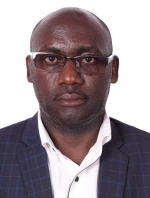
Mauro Giacomazzi
ID:
|
Effectiveness of the Whole School System Approach in Fostering Critical Thinking among Learners in Ugandan Secondary Schools
REFNo: SS931ES
Main objective
To investigate how the whole school system approach to critical thinking contributes to the development of leaners’ cognitive abilities in Ugandan secondary schools.
Specific objectives
(i) To establish the meaning of critical thinking in the Ugandan context.
(ii) To explore how teachers can improve their teaching and learning through the critical thinking activation approach.
(iii) To explore how critical thinking can be appropriately assessed in the Ugandan secondary school context.
(iv) To establish the extent to which the whole school system approach contributes to the development of critical thinking abilities of Ugandan secondary school learners.
(v) To establish individual, school and home related factors that influence critical thinking abilities of Ugandan secondary school learners.
(vi) To explore the strategies that Ugandan secondary school teachers use in preparing and delivering critical thinking augmented lessons.
|
Italy |
2021-07-22 |
2024-07-22 |
Social Science and Humanities |
Non-Clinical Trial |
Non-degree Award |

|
Robert Opika Opoka
ID: UNCST-2021-R014036
|
The role of prolonged exposure to parasitemia in the high morbidity in children with Sickle cell anaemia in Uganda
REFNo: HS1496ES
Primary Aims
1. To determine the rate of parasite clearance during artesunate therapy in children with sickle cell anaemia compared to children without SCA.
We hypothesize that children with SCA will experience parasite clearance half-life times exceeding the WHO-defined standard of 5 hours when treated with artemisinins for P. falciparum malaria, whereas children without SCA will not experience this delayed parasite clearance.
2. To determine the association between parasite clearance rate and risk of vaso-occlusive crisis, severe anaemia, and any hospitalisation in children with SCA.
We hypothesize that prolonged parasite clearance will correlate with increased risk of SCA-related sequelae.
3. To determine the association between kidney and splenic function and parasite clearance half-life during artesunate treatment for malaria.
We hypothesize that impaired renal function (estimated creatinine clearance) and splenic function (presence of Howell-Jolly bodies) will correlate with increased parasite clearance half-life.
Secondary Aims
1. To determine the incidence of treatment failure (new clinical malaria within a 28-day follow-up period after microscopy-confirmed parasite clearance) after artemisinin combination therapy for malaria
2. To detect and measure the prevalence of parasite genetic markers of artemisinin resistance in Jinja
|
Uganda |
2021-07-21 |
2024-07-21 |
Medical and Health Sciences |
Non-Clinical Trial |
Non-degree Award |

|
James Nyonyintono Mwangwa
ID: UNCST-2023-R005636
|
Feasibility of Use of the PATH bCPAP Kit including Oxygen Blenders in a Neonatal Population in Uganda
REFNo: HS650ES
Primary Objectives:
1. To assess the operational feasibility of using the PATH bCPAP kit including, when appropriate, in-line oxygen blending on neonatal patients.
2. To assess the usability and acceptability of the PATH bCPAP kit with oxygen blenders by healthcare workers.
Secondary Objective:
1. To report clinical characteristics, demographics and outcomes of patients treated with the PATH bCPAP kit and blenders in a newborn care unit in rural Uganda.
|
Uganda |
2021-07-19 |
2024-07-19 |
Medical and Health Sciences |
|
Non-degree Award |
|
Esther Buregyeya
ID: UNCST-2020-R014116
|
Using a behavioural approach to design an antimicrobial stewardship intervention in healthcare facilities in Kampala, Mukono and Luwero Districts, Uganda
REFNo: HS1303ES
1. To explore the barriers to and facilitators for rational use of antibiotics and setting up AMS programs in HCFs in Uganda.
2. To develop, pilot an AMS behavioural intervention and assess its acceptability, feasibility and effect to foster appropriate antibiotic prescription in HCFs in Uganda.
3. To assess the cost of the intervention in fostering rational use of antibiotics in Uganda.
|
Uganda |
2021-07-16 |
2024-07-16 |
Medical and Health Sciences |
|
Non-degree Award |

|
| View |
|
Sort By: |
|
|
|
| |
|