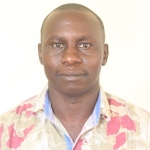
BONIFACE OJOK
ID: UNCST-2023-R006075
|
Youth Futures: Youth-led initiatives for gender justice & peacebuilding in Uganda
REFNo: SS5048ES
4.4. General Objective
The general objective of the Youth Futures project is to use video documentation and participatory video approaches to identify, document, assess, and amplify the needs of children born of war in the Acholi sub-region, and to provide them with necessary livelihood skills in filmmaking, knowledge production, and advocacy.
4.5. Specific Objectives
The specific objectives of the project are:
1. To document and analyze the experiences of children born of war in the Acholi sub-region, including their challenges, needs, and aspirations.
2. To assess the impact of humanitarian, health, and education interventions on the well-being of children born of war in the Acholi sub-region.
3. To enhance youth engagement in research and peacebuilding processes, promoting the participation and empowerment of children born of war.
4. To provide livelihood skills in filmmaking, knowledge production, and advocacy to youth participants, enabling them to become agents of change in their communities.
|
Uganda |
2026-04-10 18:24:09 |
2029-04-10 |
Social Science and Humanities |
Non-Clinical Trial |
Non-degree Award |
|
Paul Lobe
ID: UNCST-2025-R022156
|
UNSYSTEMATIC RISK FACTORS, AUDIT COMMITTEE EFFECTIVENESS AND FINANCIAL PERFORMANCE OF COMMERCIAL BANKS IN UGANDA
REFNo: SS4998ES
1-To establish the effect of credit risk on the financial performance of commercial banks in Uganda
2-To examine the effect of liquidity risk on the financial performance of commercial banks in Uganda
3-To determine the effect of operational risk on the financial performance of Commercial banks in Uganda
4a. To investigate the moderating effect of audit committee effectiveness on the relationship between credit risk and the financial performance of commercial banks in Uganda
4b. To determine the moderating effect of audit committee effectiveness on the relationship between liquidity risk and the financial performance of commercial banks in Uganda
4c. To examine the moderating effect of audit committee effectiveness on the relationship between Operational risk and the financial performance of commercial banks in Uganda
|
Uganda |
2026-04-10 18:21:31 |
2029-04-10 |
Social Science and Humanities |
Non-Clinical Trial |
Degree Award |

|
Daniel Emoru Reagan
ID: UNCST-2025-R020048
|
Adaptation and Validation of the Pictorial Fit-Frail Scale Among Older Persons Living with HIV At the Infectious Disease Institute, Kampala.
REFNo: HS7239ES
General Objective: To culturally adapt and validate the standard Pictorial Fit-Frail Scale(self-assessment) against the Fried Frailty Phenotype Scale for frailty screening among OPLWH aged ≥50 years at the Infectious Disease Institute, Kampala.
Specific Objectives
To culturally adapt and validate the standard Pictorial Fit-Frail Scale(self-assessment) against the Fried Frailty Phenotype Scale for frailty screening among OPLWH aged ≥50 years at the Infectious Disease Institute, Kampala.
1.4.2. SPECIFIC OBJECTIVES
(i) To culturally adapt the PFFS among OPLWH aged ≥ 50 years at the infectious disease institute, Kampala, by assessing comprehension of its 14 pictorial domains and modifying images as needed for the Ugandan context.
(ii) To determine the diagnostic validity of the PFFS compared to FFP scale for frailty screening among OPLWH aged ≥50 years at the Infectious Disease Institute, Kampala.
(iii) To determine the level of agreement between frailty classifications obtained using the PFFS and FFP among OPLWH aged ≥50 years at the Infectious Disease Institute, Kampala.
|
Uganda |
2026-04-10 18:20:22 |
2029-04-10 |
Medical and Health Sciences |
Non-Clinical Trial |
Degree Award |
|
John Mugwanya Mulo
ID: UNCST-2026-R023496
|
Digital Media and Malaria Vaccine: Perceptions of Parents with Children Under Five in Wakiso and Karenga Districts, in Uganda
REFNo: SS5060ES
In general, the research will understand the perceptions of parents with children under five years of age on the influence of digital media on the uptake of the malaria vaccine in Wakiso and Karenga Districts. Specifically, it will: explore how parents of children under five in Wakiso and Karenga Districts in Uganda perceive the influence of digital media on malaria vaccine acceptance, identify barriers and facilitators to malaria vaccine uptake shaped by digital media exposure and develop qualitative insights and recommendations for leveraging trusted digital media channels to enhance malaria vaccine uptake, complementing interventions like vector control, case management, chemoprevention and surveillance.
|
Uganda |
2026-04-10 18:17:56 |
2029-04-10 |
Social Science and Humanities |
Non-Clinical Trial |
Non-degree Award |

|
William Worodria Ofuti
ID: UNCST-2022-R010915
|
Program for Rifampicin-Resistant Disease with Stratified Medicine for TB” (PRISM-TB)
REFNo: HS7398ES
To identify, among participants with fluoroquinolone-susceptible multidrug-resistant/rifampicin-resistant tuberculosis (FQ-S MDR/RR-TB), the preferred BPaLM strategy of 13 or 17 weeks for participants stratified to receive shorter treatment and 17 or 24 weeks for participants stratified to receive longer treatment, as defined by a prespecified stratification algorithm, and to evaluate whether this BPaLM strategy has noninferior efficacy to the control strategy at Week 73.
1. To evaluate whether a BPaLM strategy of 17 weeks for participants stratified to receive shorter treatment and 24 weeks for participants stratified to receive longer treatment, as defined by a prespecified stratification algorithm, has superior DOOR probability to the control strategy combining efficacy at the end of follow-up (a minimum of 28 weeks post-randomization) and safety at 28 weeks post-randomization.
2. To evaluate whether a BPaLM strategy of 17 weeks for all participants has superior DOOR probability to the control strategy combining efficacy at the end of follow-up (a minimum of 28 weeks post-randomization) and safety at 28 weeks post-randomization.
3. To evaluate whether a BPaLM strategy of 13 weeks for participants stratified to receive shorter treatment and 24 weeks for participants stratified to receive longer treatment, as defined by a prespecified stratification algorithm, has superior DOOR probability to the control strategy combining efficacy at the end of follow-up (a minimum of 28 weeks post-randomization) and safety at 28 weeks post-randomization.
4. To evaluate whether a BPaLM strategy of 13 weeks for participants stratified to receive shorter treatment and 17 weeks for participants stratified to receive longer treatment, as defined by a prespecified stratification algorithm, has superior DOOR probability to the control strategy combining efficacy at the end of follow-up (a minimum of 28 weeks post-randomization) and safety at 28 weeks post-randomization.
5. To compare the proportion of participants who experience grade 3 or higher adverse events by Week 28 in the preferred BPaLM strategy to the control strategy.
6. To compare the proportion of participants who experience adverse events of special interest by Week 28 in the preferred BPaLM strategy to the control strategy.
7. To compare the proportion of participants who experience a TB-related unfavorable outcome at Week 73 on the preferred BPaLM strategy with the control strategy, among participants stratified to receive shorter treatment.
8. To compare the proportion of participants who experience a TB-related unfavorable outcome at Week 73 on the preferred BPaLM strategy with the control strategy, among participants stratified to receive longer treatment.
9. To evaluate the pharmacokinetics of all drugs in the BPaLM regimen with an additional focus on bedaquiline elimination (Stages 1 and 2).
10. To determine the dose-response and exposure-response relationships between study drug estimated PK parameters with efficacy and toxicity (Stages 1 and 2).
11. To evaluate the feasibility and acceptability of treatment stratification in the context of treatment for MDR/RR-TB from the participant and the health system perspective (Stages 1 and 2).
|
Uganda |
2026-04-10 18:15:27 |
2029-04-10 |
Medical and Health Sciences |
Clinical Trial |
Non-degree Award |
|
| View |
|
Sort By: |
|
|
|
| |
|